
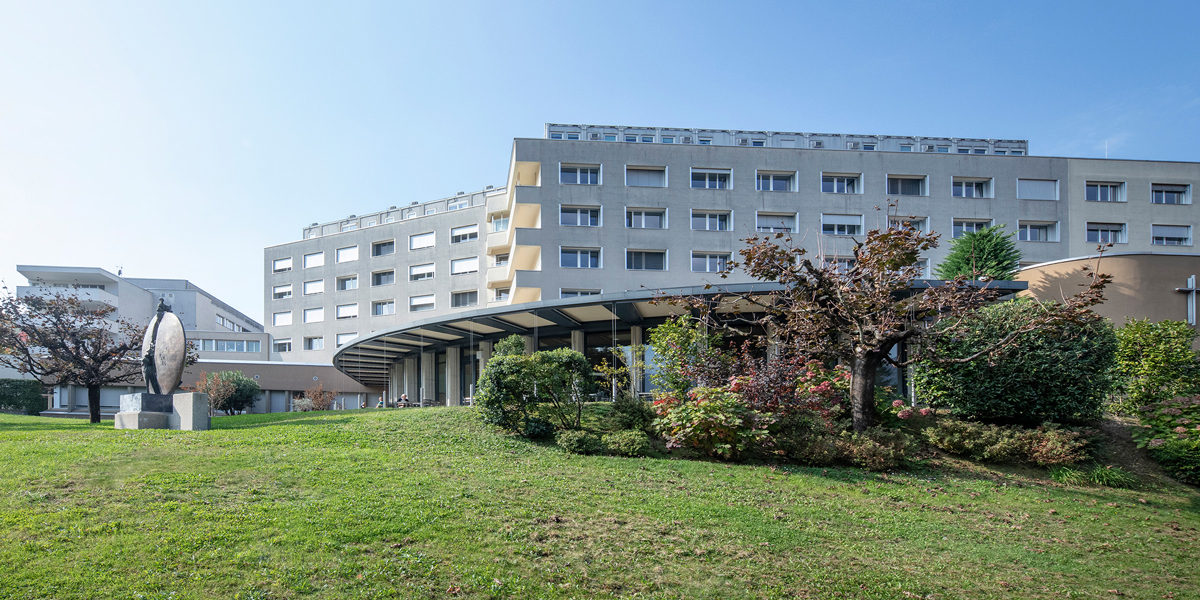
The Gruppo Ospedaliero Moncucco has implemented the Dragon Medical One solution as part of the ongoing development of its digital tools for clinical documentation.
Gruppo Ospedaliero Moncucco
Clinica Moncucco looks back on a century-long tradition. The first facility was founded in 1,900 at the request of the residents of Lugano, who wanted a facility for patient care. In 2022, Clinica Moncucco in Lugano merged with Clinica Santa Chiara in Locarno; this collaboration led to the founding of the Gruppo Ospedaliero Moncucco in 2023.
Today, the group employs 1,022 staff members as well as specialists from various medical disciplines. Its approach is always guided by the latest developments in medical practice – with the patient at the center and a clear focus on technical and scientific progress.
Key facts
- Number of licenses: 84
- Solutions & services used: Dragon Medical One, Voicepoint Argon®
Project Objective
In 2019, Clinica Moncucco began exploring ways to optimize selected processes in clinical document management. As part of this effort, a small group of physicians conducted initial tests with Dragon Medical Direct (DMD) – until then, the facility had been using a conventional digital dictation system.
The goal was to evaluate solutions that would improve selected documentation processes, meet the operational needs of the medical staff, and support the further development of workflows.
Introduction of the Dragon Solution
Following the pilot phase, the solution was gradually rolled out across various departments. Edith Capitani, Head of the Department of Information Systems and Innovation, explains:
“We used to use a digital dictation system with audio recording, which was gradually replaced by speech recognition. We started using Dragon Medical Direct in 2020 and recently switched to Dragon Medical One. Today, 84 Dragon Medical licenses are active at our two locations, Clinica Moncucco and Clinica Santa Chiara. They cover the most important specialties: neurology, urology, gastroenterology, oncology, cardiology, pulmonology, obesity treatment, geriatrics, and radiation therapy.”
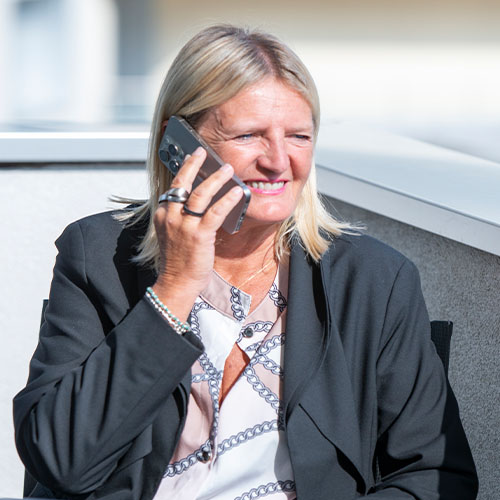
Edith Capitani
Head of the Department of Information Systems and Innovation
In neurology, where documentation can be particularly detailed, the use of speech recognition has become an integral part of daily work. Dr. Giovanna Campagna Pedrazzini, a neurologist, explains:
“I’ve been using Dragon Medical One since 2023 to draft all my letters. I use it in particular for correspondence with the Disability Insurance (IV) as well as for certain complex emails. We have to document a lot of information, including lengthy medical histories and detailed assessments. When proofreading, I find that it takes less time compared to typing. Quick access to information is also an important aspect, especially during hospital consultations.”
Dr. Giovanna Campagna Pedrazzini
Neurologist
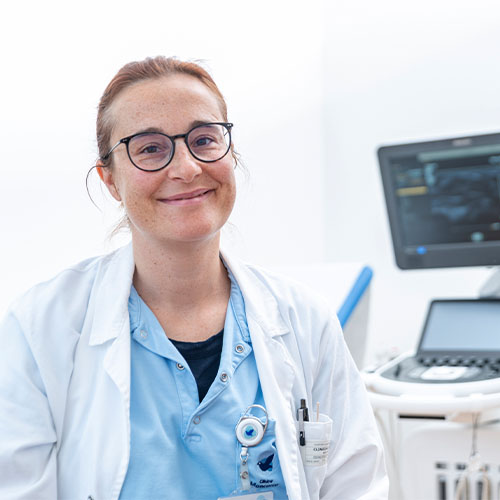
The use of speech recognition has also changed certain administrative tasks related to document processing. Elisabetta Paulus, an administrative assistant in the neurology outpatient clinic, explains:
“The role of the medical assistant has evolved. With earlier audio systems, the quality of the recordings sometimes made it difficult to understand the content. The integrated medical vocabulary is a great help, especially in our field of work. Proofreading is easier, and certain processes involved in preparing letters have changed. Given the increasing workload and growing volume of requests, these tools help optimize our daily organization.
There are four of us secretaries with varying workloads, and I mainly handle the reports. All the doctors in the department use Dragon. We’ve also reduced our paper consumption, which has an impact on internal processes.”
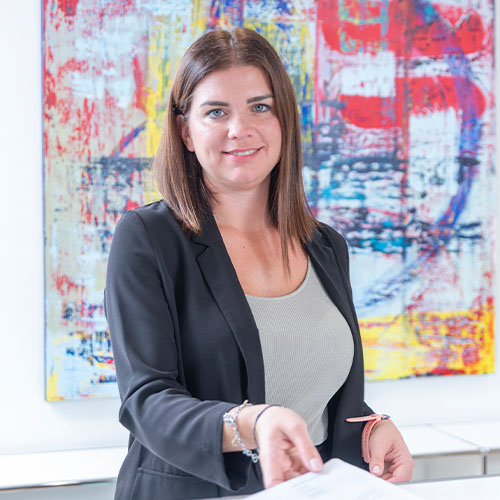
Elisabetta Paulus
Administrative assistant in the neurology outpatient clinic
At the outpatient care center, which comprises 13 departments and nearly 20 specialists, document coordination poses a significant organizational challenge. Mariangela Totaro, department head at the San Carlo Outpatient Care Center, describes the changes she has observed:
“Doctors now draft letters, emails, and clinical reports themselves. The administrative staff are primarily occupied with checking the content and formatting before sending them out.
This has made it possible to reorganize certain tasks. In pulmonology, a large portion of the time used to be spent transcribing letters, which sometimes led to delays in processing them. Today, the electronic health record allows for faster access to the available information.”
Mariangela Totaro
Department head at the Outpatient Care Center
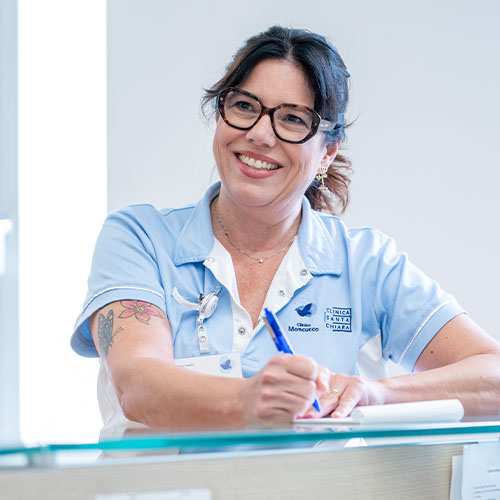
Dr. Elisa Biacchi, a specialist in general internal medicine, prevention, obesity treatment and nutrition, highlights several aspects related to the daily use of the software:
“I’ve been using Dragon Medical for almost ten years. The text appears as I dictate, which allows me to review the content immediately. With earlier systems, certain information had to be interpreted during transcription.
Dragon Medical is used for various types of documents, from clinical reports to emails. It also allows me to view additional information on the screen while dictating. In my outpatient practice, this also means a change in how I organize my workspace: I can adjust my position and more easily maintain interaction with the patient during certain phases of the consultation.”
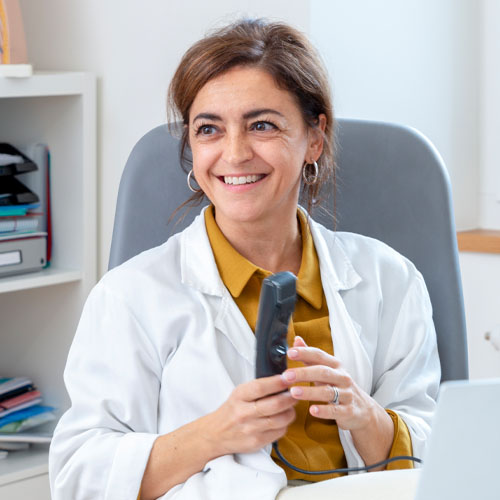
Dr. Elisa Biacchi
Specialist in general internal medicine, prevention, obesity treatment
and nutrition
In the outpatient urology department, Anna D’Aversa, an administrative staff member, describes a change in processing times:
“With the previous system, transcription could take longer due to repeated listen-backs and interruptions from the daily routine. Today, certain documents can be produced more quickly. We can draft the reports shortly after the consultation, which contributes to a smoother documentation process.”
Anna D’Aversa
Administrative staff member
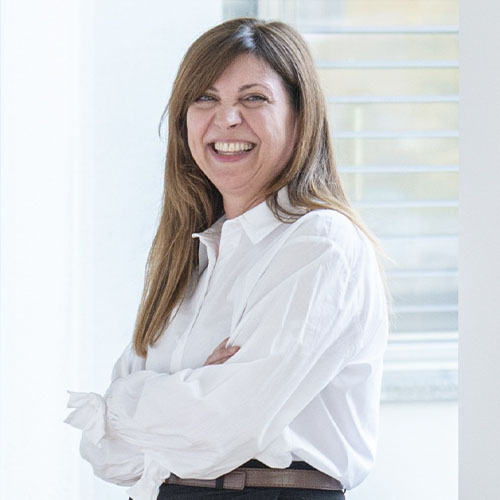
In gastroenterology, Dr. Davide Lanza uses Dragon Medical One primarily for outpatient consultations:
“I’ve been using it daily for three years. The report is dictated immediately after the consultation. Since I see the text right away, I can review the content immediately. I also use the software for emails, and certain features – such as adding a custom vocabulary or automatic insertions – can simplify certain repetitive tasks.”
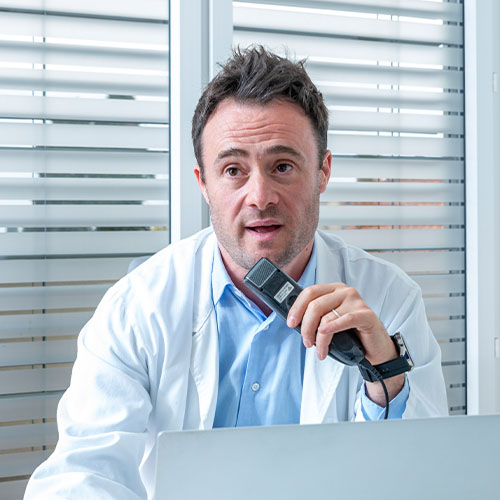
Dr. Davide Lanza
Internal Medicine Specialist with expertise in Gastroenterology
Results and Implementation
The integration of Dragon Medical One into the Gruppo Ospedaliero Moncucco is part of a process to transform medical and administrative documentation practices. Edith Capitani explains:
“Usage data shows a gradual increase in the number of monthly sessions, with more than 34,800 sessions recorded in 2024 and 42,619 in 2025, indicating growing acceptance of the tool. The use of Dragon Medical One is accompanied by observed changes in the speed of text creation, the standardization of content, and document management procedures.”
It also underscores the role of training and support in helping users adopt the tools, particularly through the integration of user-defined vocabularies and automated templates.
The experience of the Gruppo Ospedaliero Moncucco demonstrates that a speech recognition solution can be integrated into a multi-site clinical environment and contribute to the further development of documentation and organizational processes.